How the UAE’s Lifestyle Can Affect Your Retina Health
The Rise of Retinal Surgeries in the UAE: What Patients Need to Know
Imagine waking up one morning and realizing the center of your vision looks blurry or distorted — straight lines seem wavy, and reading becomes difficult. This could be one of the first warning signs of Age-Related Macular Degeneration (AMD), a leading cause of irreversible vision loss in older adults worldwide.
In fact, the World Health Organization (WHO) estimates that AMD accounts for nearly 5.8% of global blindness, affecting millions aged 50 and above.
If you’re concerned about vision changes or have a family history of AMD, it’s time to take your eye health seriously. A quick consultation with an expert can make all the difference in preventing permanent damage.
👉 Consult an eye specialist in Abu Dhabi today to safeguard your vision.
What Is Age-Related Macular Degeneration (AMD)?
AMD is a chronic eye condition that damages the macula, the central part of the retina responsible for sharp vision used in reading, driving, and recognizing faces. As the macula deteriorates, central vision becomes blurred, while peripheral vision often remains intact.
The disease progresses slowly in some people (dry AMD) and rapidly in others (wet AMD), but in both cases, early diagnosis is crucial to delay vision loss.
How AMD Affects the Eyes
Your retina is like a canvas that receives light and sends signals to your brain. The macula — a small, sensitive spot in the retina — provides high-definition vision. In AMD, deposits known as drusen form under the macula, damaging retinal cells and the retinal pigment epithelium (RPE). Over time, this results in distorted or lost central vision.
Types of AMD: Dry vs. Wet Macular Degeneration
Dry (Atrophic) AMD
- Accounts for 90% of all AMD cases.
- Characterized by the gradual thinning of macular tissue.
- Vision loss occurs slowly but progressively.
Wet (Exudative or Neovascular) AMD
- Represents 10% of cases but causes 90% of severe vision loss.
- Abnormal blood vessels grow beneath the retina, leaking fluid or blood.sue.
- Without prompt treatment, central vision can deteriorate within weeks.
How Common Is AMD? Global and Regional Prevalence Statistics
The global prevalence of AMD stands at 8.7% among people aged 45–85 years.
- In 2020, approximately 196 million people had AMD.
- The number is projected to reach 288 million by 2040.
- In the U.S., 19.8 million people live with AMD, including 1.5 million with late-stage vision-threatening disease.
Among adults aged 80 and above, nearly 1 in 3 experience early AMD and 1 in 10 develop advanced stages.
These numbers highlight why routine eye exams after 50 are critical for early detection.
Who Is Most at Risk for AMD?
Non-Modifiable Risk Factors
- Age: Most common in individuals aged 50+.
- Genetics: Family history increases risk significantly (CFH and ARMS2 genes).
- Ethnicity: People of European descent show 11.2% early AMD prevalence — higher than other groups.
Modifiable Risk Factors
- Smoking: Increases AMD risk 3–4 times and worsens response to treatment.
- Hypertension, Diabetes, and High Cholesterol: All contribute to retinal damage.
- Obesity & Sedentary Lifestyle: Linked to faster AMD progression.
Smoking and AMD: The Most Preventable Cause
Did you know smoking nearly triples your risk of late-stage AMD?
According to research, smokers are 3.9 times more likely to develop vision-threatening AMD compared to non-smokers. Even former smokers have a 3.4x higher risk — it can take 20 years for risk levels to return to normal after quitting.
Other Diseases That Increase Your AMD Risk
Hypertension and Hyperlipidemia
High blood pressure and cholesterol impair blood flow to the retina, accelerating degeneration.
Diabetes Mellitus
A Korean cohort study found diabetics have a 1.13x to 1.40x higher risk of AMD , especially with long disease duration.
Obesity and Poor Diet
Deficiencies in antioxidants, vitamins C & E, and zinc can weaken retinal cells and increase AMD susceptibility.
How to Know If You’re Developing AMD: Symptoms and Early Signs
Common early symptoms include:
- Blurred or fuzzy central vision.
- Difficulty reading or recognizing faces.
- Straight lines appearing wavy (Amsler grid test).
- Dark or empty spots in central vision.
If you notice these signs, schedule a comprehensive eye exam immediately.
How AMD Is Diagnosed: From Eye Exam to Imaging
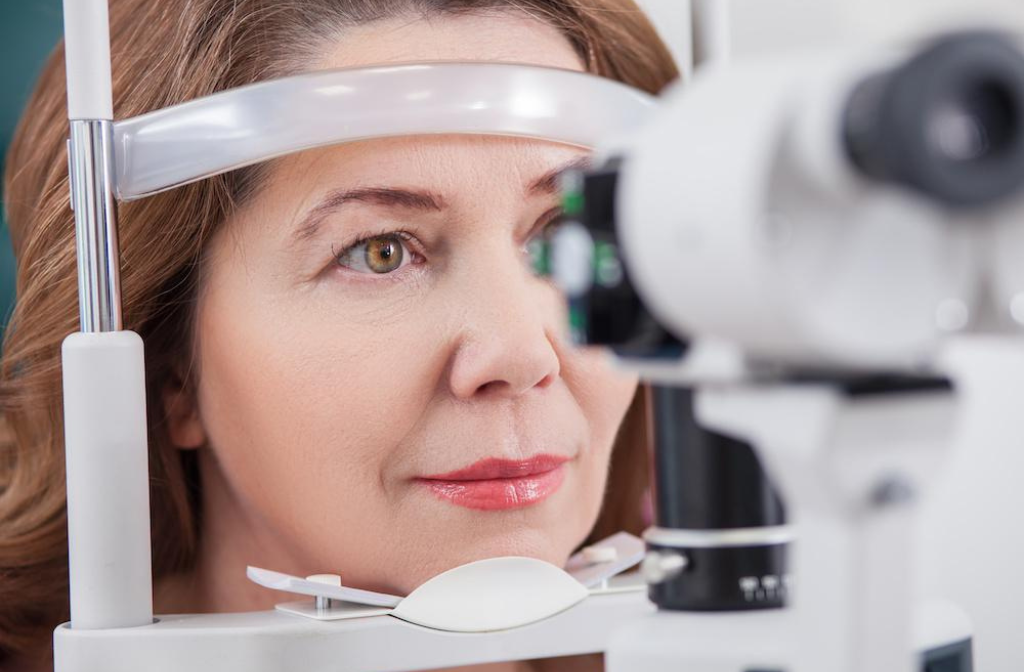
Eye specialists use optical coherence tomography (OCT) and fluorescein angiography to visualize macular changes. Early diagnosis helps tailor treatment before irreversible damage occurs.
Can AMD Be Prevented? Evidence-Based Prevention Tips
While you can’t change your genetics, lifestyle plays a massive role.
Preventive steps include:
- Quitting smoking.
- Controlling blood pressure and sugar levels.
- Wearing sunglasses with UV protection.
- Eating a macula-friendly diet rich in leafy greens, omega-3s, and nuts.
Diet and Lifestyle Changes to Lower AMD Risk
The AREDS (Age-Related Eye Disease Study) recommends supplements with vitamin C, vitamin E, zinc, and lutein to reduce AMD progression risk by up to 25% .
Regular exercise and a Mediterranean-style diet have also been shown to slow AMD progression.
Treatment Options for AMD: What Modern Medicine Offers
Anti-VEGF Injections
These block abnormal blood vessel growth and leakage in wet AMD.
Photodynamic Therapy
Combines light-activated drugs with laser to seal leaky vessels.
Laser and Emerging Therapies
Gene and stem-cell therapies are being explored to regenerate retinal cells.
Living with AMD: Coping and Visual Aids
Low-vision aids like magnifiers, adaptive lighting, and electronic reading devices can help maintain independence. Support groups and counseling also assist in emotional adaptation.
Early Detection Is Key: Why Regular Eye Exams Matter
AMD can progress silently for years before symptoms appear. Annual checkups after age 50 allow ophthalmologists to catch early macular changes and initiate treatment promptly.
👉 Schedule an appointment with an eye specialist in Abu Dhabi to protect your central vision today.
👉 Schedule an appointment with an eye specialist in Abu Dhabi to protect your central vision today.
Why Abu Dhabi Patients Trust Retina Care Abu Dhabi for AMD Management
At Retina Care Abu Dhabi, Dr. Madhava Rao leads a specialized team in diagnosing and managing age-related macular degeneration using cutting-edge imaging and treatment technologies.
The clinic emphasizes preventive care, personalized treatment plans, and continuous follow-up support to maintain visual stability.
Why Choose Dr. Madhava Rao – The Surgical Retina Expert in Abu Dhabi
- 28+ years of retinal surgery experience.
- Specialist in wet macular degeneration treatments and intravitreal injections.
- Member of the American Academy of Ophthalmology (AAO) and Royal College of Surgeons (UK).
- Renowned for his compassionate, patient-centered approach in the UAE.
Conclusion: Protecting Your Sight Starts with Awareness
Age-related macular degeneration doesn’t have to mean losing your vision. With awareness, timely screening, and expert care, you can protect your sight for years to come.
If you’re over 50 or have risk factors, schedule an eye exam now — because prevention always starts with early detection.
FAQs About Age-Related Macular Degeneration
Q1. Can macular degeneration be cured?
There’s no complete cure, but treatments can slow or stop progression, especially in wet AMD.
Q2. What age does AMD usually start?
Typically after 50, but risk rises sharply after 60.
Q3. Can supplements really help AMD?
Yes — AREDS vitamins (C, E, zinc, lutein) can reduce progression risk by about 25%
Q4. Is AMD hereditary?
Yes, genetic factors significantly influence AMD development.
Q5. Can I still drive with AMD?
In early stages, yes. Regular eye checks ensure safe vision levels for driving.